
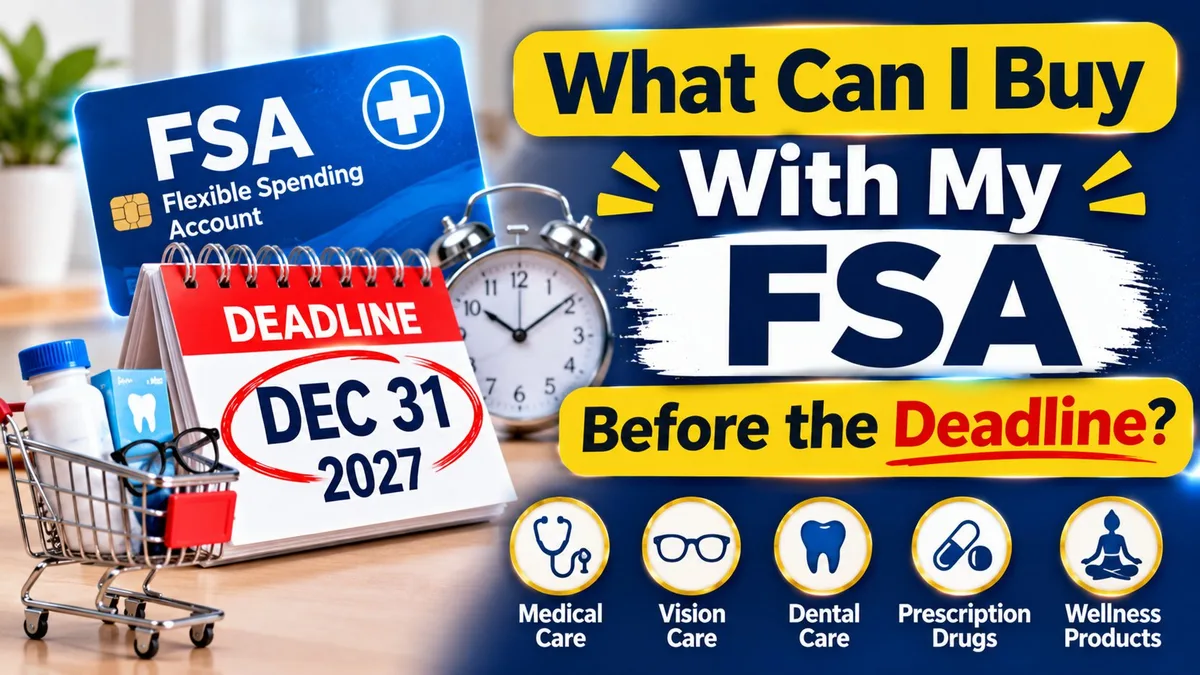
The quick answer: your Flexible Spending Account can pay for far more than doctor visits — prescription glasses and sunglasses, contact lenses and solution, over-the-counter medicine, sunscreen, first-aid supplies, blood-pressure monitors, dental work, therapy and more. If your plan year ends December 31 and your plan has no grace period, whatever you do not spend above the $680 carryover limit disappears. First, check exactly how much of your balance is at risk with our FSA Calculator; then use the lists below to spend it well. (The deadline rules themselves — carryover vs grace period vs run-out — are explained in our FSA deadline guide.)
Eligible: the things people forget they can buy
- Glasses and prescription sunglasses — frames, lenses, a second pair, and prescription sunnies all count.
- Contact lenses and solution — stock up within reason; solution and cases are eligible too.
- Over-the-counter medicine, no prescription needed — since the 2020 CARES Act: pain relievers, allergy medicine, cold and flu remedies, antacids, antihistamines.
- Menstrual products — pads, tampons, liners and cups are eligible, also since the CARES Act.
- Sunscreen — broad-spectrum, SPF 15 or higher.
- First aid — bandages, gauze, antiseptic, first-aid kits, hot and cold packs.
- Home medical devices — blood-pressure monitors, thermometers, pulse oximeters, blood-glucose meters and testing supplies, heating pads, braces and supports.
- Dental work — cleanings, fillings, X-rays, extractions, and payments toward orthodontia.
- Eye care — exams, reading glasses, laser eye surgery.
- Appointments you have been postponing — dermatology checks, physical therapy, chiropractic care, acupuncture, therapy and counselling visits, flu shots and vaccinations.
- Prescriptions — refills and copays, including insulin (always eligible, no prescription needed for reimbursement purposes).
- Pregnancy and family — prenatal vitamins when prescribed, ovulation and pregnancy tests, breast pumps and supplies.
- Travel to medical care — mileage and parking for medical appointments are reimbursable if you keep records.
Eligibility follows IRS Publication 502, and your employer’s plan document has the final word — borderline items are worth a two-minute check with your plan administrator before you buy, not after.
NOT eligible — the traps
- Cosmetics and toiletries — makeup, regular shampoo, moisturiser, toothpaste for general use.
- Teeth whitening — cosmetic, even at the dentist.
- General vitamins and supplements — only eligible when prescribed for a specific diagnosed condition (and plans may ask for a letter of medical necessity).
- Gym memberships and fitness classes — generally not eligible; a narrow exception exists when a doctor prescribes exercise for a specific condition, with documentation.
- Health insurance premiums — never payable from a health FSA.
- Someone else’s expenses — only you, your spouse and your tax dependents count.
A spend-down plan by balance
About $50 left: sunscreen, a stocked first-aid kit, OTC staples for winter, contact solution. One small basket clears it.
About $200 left: the classic move is a pair of prescription glasses or sunglasses — useful, correctly sized, and you were going to buy them anyway. Add a blood-pressure monitor if your household lacks one.
$500 or more left: book the appointments first — dental cleaning and check-up, eye exam, dermatology — because December calendars fill up fast. Then glasses, then devices. If a large balance remains with days to go, check whether your plan actually has a grace period (spending until March 15, 2027) before panic-buying anything: our FSA Calculator works out how much is genuinely at risk under each rule.
Three deadline details that save people
1. “Use it” means the expense must be incurred by the deadline — the appointment attended or the item bought — not merely paid for. 2. Most plans give you a separate run-out period (often until March 31) to submit claims for expenses from the plan year — that is filing time, not extra spending time. 3. Carryover and grace period are either/or: a plan offers one or neither, never both, and the 2026 carryover cap is $680. And if you are choosing next year’s election during open enrollment, the same calculator’s second half estimates a sensible amount from your expected expenses and tax bracket.
Check your number first: the FSA Calculator — enter your balance and plan type, and it tells you exactly what you would lose on December 31 and by when you must spend it.
Frequently asked questions
What can I buy with my FSA card?
Any IRS-qualified medical expense: doctor and therapy copays, prescriptions, dental and vision care, glasses and contacts, over-the-counter medicine (no prescription needed since 2020), menstrual products, sunscreen SPF 15+, first-aid supplies and home devices like blood-pressure monitors.
Can I buy sunscreen with my FSA?
Yes — broad-spectrum sunscreen with SPF 15 or higher is FSA-eligible. The same rule covers many sun-protection products; check the label for the SPF and ‘broad spectrum’.
Are vitamins FSA-eligible?
Usually not. General vitamins and supplements for overall wellness are not eligible. A vitamin prescribed for a specific diagnosed condition can be, and your plan may require a letter of medical necessity from your doctor.
What happens to unspent FSA money on December 31?
It depends on your plan: with a carryover you keep up to $680 into 2027; with a grace period you keep the full balance but must spend it by March 15, 2027; with neither, the entire leftover balance is forfeited. Plans never offer both carryover and a grace period.
Can I use my FSA for my spouse or children?
Yes — FSA funds cover eligible expenses for you, your spouse and your tax dependents, even if they are not on your health plan. They cannot be used for anyone else.