
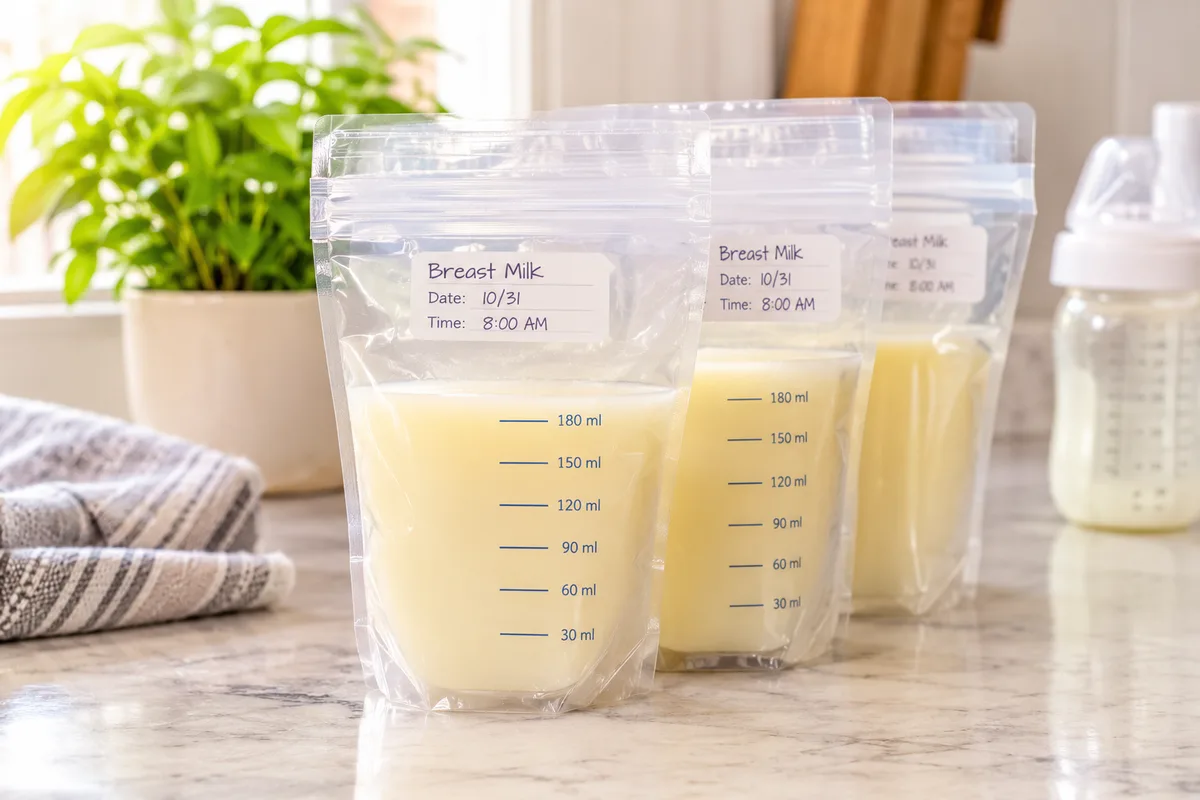
Everything you need for your stash
Pre-sterilised, single-use bags that freeze flat and thaw fast — the standard choice for building a freezer stash, in the 4–6 oz portions this plan is built around.
A hospital-grade double electric pump with a rechargeable battery — the pump many working mums use to add the one extra daily session this plan counts on.
A freezer tray and container that holds up to 10 bags frozen flat and in date order, so first-in, first-out happens on its own.
As an Amazon Associate, ToolFoxHub earns from qualifying purchases made through these links — it never adds to the price you pay. Prices and availability are shown on Amazon and can change at any time.
The only formula behind every stash goal
Every lactation guide, whatever its headline number, is built on one rule: a breastfed baby drinks about 1 to 1.5 ounces of milk for every hour you are apart. Multiply your hours away (including the commute — the clock your baby experiences) by that rate and you have one workday of milk. Multiply by the number of buffer days you want in the freezer and you have your goal. Everything in the planner above is that arithmetic, done honestly and shown in bags, because "56 ounces" is abstract and "15 bags" is a shopping-and-freezing plan.
Why you do not need a freezer full of milk
Social media is full of freezers groaning with hundreds of ounces, and it quietly sets an impossible standard. Here is what the professionals actually say: most lactation consultants recommend arriving at your first day back with 3 to 5 workdays of milk — roughly 36 to 80 ounces for a typical schedule. The reason is simple: once you are back, the milk you pump at work on Monday is what your baby drinks on Tuesday. The freezer stash is a buffer for the first days, a growth spurt, a spilled bottle or a sick day — not the supply itself. A buffer you reach calmly beats a mountain you burn out chasing.
When to start building
Two timings matter. First, most guidance suggests waiting until your supply is established — around 4 to 6 weeks after birth — before adding extra pumping sessions, so you do not create an oversupply problem. Second, start the build itself about 3 to 4 weeks before your return date. That window is exactly what the planner checks for you: your daily extra, multiplied out, either lands before your first day back or it does not — and if it does not, you find out today, while one extra short session a day can still fix it.
The small-numbers secret
A dedicated stash session after the first morning feed — when supply is naturally highest — typically adds 1 to 4 extra ounces a day. That sounds trivial until you multiply it: 3 ounces a day is 90 ounces in a month, more than the full recommended buffer for most schedules. Stash building is a consistency game, not a volume game, which is why the plan above is drawn week by week.
Freeze in feeding-size portions
Freeze milk in 2 to 4 ounce portions rather than one big container. Thawed milk cannot be refrozen and must be used within 24 hours, so a 4-ounce bag that matches one feeding wastes nothing; an 8-ounce bag your baby only half-finishes wastes half. Leave a little room at the top of each bag — milk expands as it freezes — and label every bag with the date. Use the oldest milk first (first in, first out), and lay bags flat: they freeze faster, thaw faster and stack like files instead of lumps.
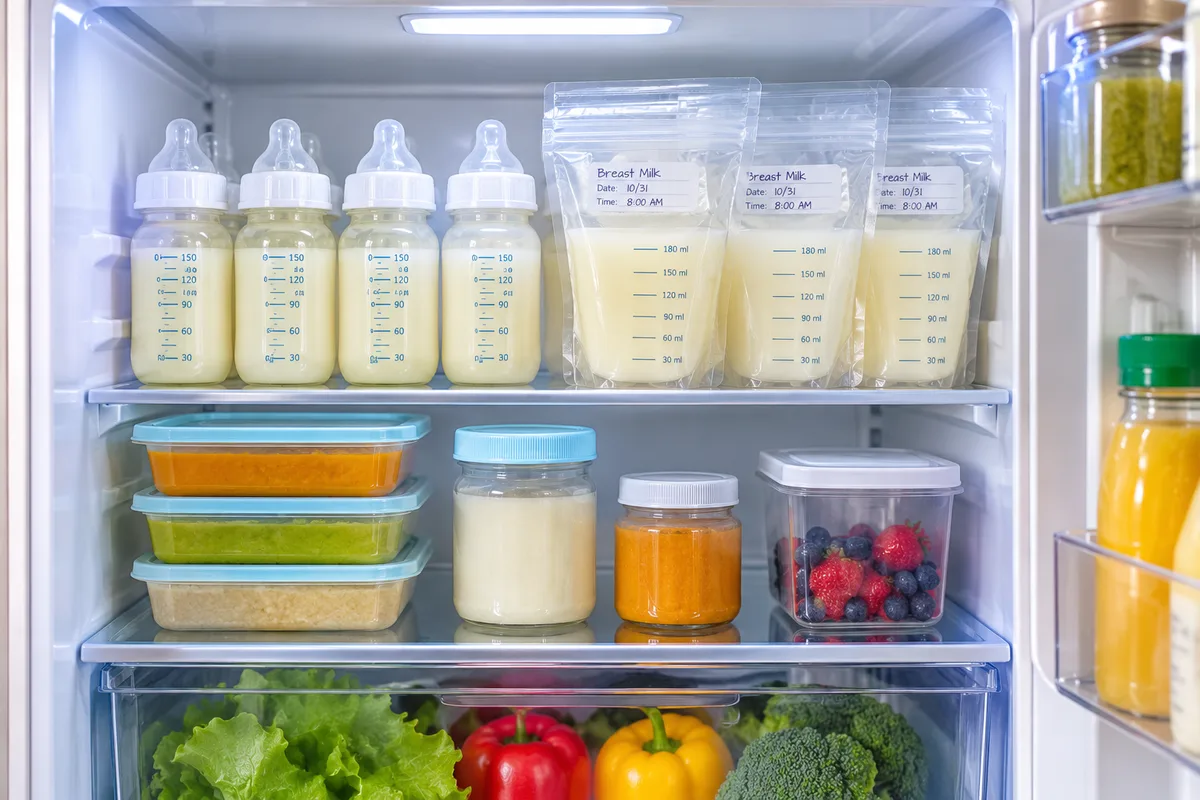
Bottles and labeled bags, oldest at the front — first in, first out.
Safe storage times (CDC)
| Where | Freshly pumped milk |
|---|---|
| Room temperature (up to 77°F / 25°C) | Up to 4 hours |
| Cooler bag with frozen ice packs | Up to 24 hours |
| Refrigerator (40°F / 4°C or colder) | Up to 4 days |
| Freezer (0°F / -18°C or colder) | Best within 6 months; up to 12 months is acceptable |
Once thawed, milk keeps 24 hours in the fridge and 1–2 hours at room temperature — and it is never refrozen. When in doubt, the CDC's storage page is the authority; this planner follows it. Planning the rest of the baby budget too? Our Diaper Stockpile Calculator works the same way — your baby's real numbers in, an honest plan out — and the full reasoning behind the numbers on this page is in our guide: How Much Breast Milk Should I Store Before Going Back to Work?
Frequently asked questions
How much breast milk should I have stored before going back to work?
For most schedules, 3 to 5 workdays of milk — roughly 36 to 80 ounces. Work it out from your own day: babies drink about 1 to 1.5 oz per hour you are away, so a 9-hour day (with commute) needs about 11 to 13 oz, and five of those days is a 56 to 65 oz goal. You do not need a freezer full: once you are back, the milk you pump at work covers the next day, and the stash is a buffer.
How many bags of breast milk should I freeze?
Divide your goal in ounces by your bag size. A typical 56 oz goal in the most common 4 oz bags is about 15 bags. Freezing in 2 to 4 oz portions is deliberate: thawed milk must be used within 24 hours and cannot be refrozen, so bag size should match one feeding.
How long does it take to build a freezer stash?
At a gentle 3 to 4 extra ounces a day — one added morning session — a 56 oz buffer takes about two to three weeks, which is why starting 3 to 4 weeks before your return date works. The calculator above turns your own daily extra into an exact goal date and tells you if it lands before your first day back.
How long will my freezer stash last?
Divide your stash by one workday of milk (your hours away × 1 to 1.5 oz). A 60 oz stash with an 11 oz workday covers about 5 workdays. Remember it is a buffer, not the supply: pumping at work replaces each day's milk as you go.
How long can breast milk stay in the freezer?
Per the CDC, frozen breast milk is best used within 6 months and remains acceptable for up to 12 months in a freezer at 0°F (-18°C) or colder. In the fridge it keeps up to 4 days, and once thawed it must be used within 24 hours and never refrozen.